

Fabricated vs. Field-Fabricated Roof Flashings: Which Performs Better?
Roof flashing is one of the most important details on a commercial roofing system, but it is also one of the areas most vulnerable to installation problems. Flashings protect transitions, penetrations, curbs, drains, walls, and other areas where the roofing membrane must connect with another component. When these details are not properly designed or installed, they can become pathways for moisture intrusion and premature roof deterioration.
One decision contractors face is whether to use prefabricated roof flashings or fabricate flashing materials directly on the jobsite. Both approaches have a place in commercial roofing, but they are not necessarily equal in terms of consistency, labor, installation conditions, or the level of precision they can provide.
The better choice depends on the specific roof detail, the roofing system being installed, and the conditions of the project. Understanding the differences between the two approaches can help contractors make more informed decisions and reduce avoidable problems around some of the most critical areas of a commercial roof.
What Are Roof Flashings and Why Do They Matter?
Roof flashing is used to protect transitions and penetrations where the roofing membrane alone cannot provide the complete detail required. Flashings help direct water away from vulnerable areas and create a connection between the roof membrane and surrounding components.
Common flashing locations include:
Pipe penetrations
HVAC equipment and curbs
Roof drains
Scuppers
Wall transitions
Expansion joints
Roof edges
Corners
Mechanical penetrations
These locations deserve particular attention because they interrupt the relatively continuous surface of the roof membrane. A flashing detail must account for movement, water flow, material compatibility, attachment, and the specific requirements of the roofing system.
The International Institute of Building Enclosure Consultants, or IIBEC, identifies proper penetration detailing as an important part of a completed roofing assembly because penetrations can become potential points for leaks or breaches over the life of the roof. Its technical guidance also emphasizes following the roofing manufacturer's requirements and using installation personnel who are properly trained in the required detailing techniques.
That means flashing should not be treated as a minor accessory added at the end of a roofing project. It is an integral part of the roof assembly.
What Are Prefabricated Roof Flashings?
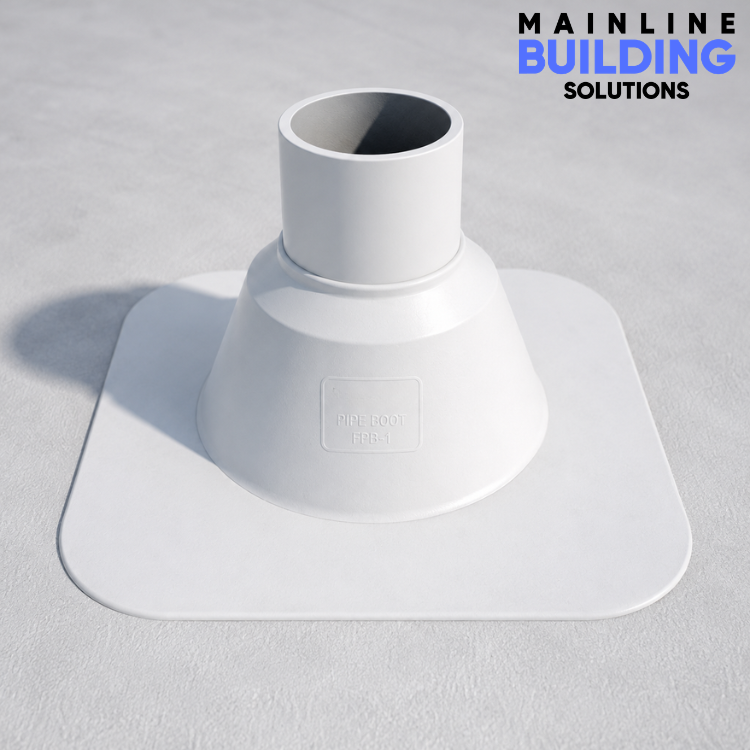
Prefabricated flashings are manufactured before they arrive at the roofing project. Instead of taking membrane, metal, or another flashing material and forming the complete detail on the roof, the contractor receives a component that has already been produced for a specific application.
Depending on the product and roofing system, prefabricated components can include pipe flashings, corners, curbs, drains, scuppers, edge metal, and other accessories.
The primary advantage is consistency. A component produced in a controlled manufacturing environment can be fabricated according to established dimensions and product specifications before it reaches the jobsite.
That can reduce the amount of cutting, measuring, forming, and assembly required by the roofing crew.
For example, FlashCo® manufactures prefabricated and premolded roof flashings and accessories for commercial roofing applications, including single-ply systems. Its product line includes TPO and PVC flashings, drains, scuppers, curbs, and other accessories.
For contractors interested in reviewing available flashing options, the FlashCo product line provides examples of the types of prefabricated components available for different roofing applications.
What Does Field Fabrication Involve?
Field fabrication means the flashing is created or modified at the jobsite. The roofing crew measures the condition, cuts the material, forms or wraps it around the penetration or transition, and completes the necessary seams, welds, fasteners, or sealant work in the field.
Field fabrication can be extremely useful when a roof contains unusual conditions or when a standard prefabricated component will not fit the application.
Commercial buildings rarely have completely uniform roof conditions. Existing structures may contain irregular penetrations, unusual equipment, tight clearances, or combinations of components that require a customized approach.
IIBEC's guidance illustrates this distinction. Standard prefabricated pipe boots are appropriate for certain round penetrations that meet specific dimensional and installation requirements, while field-wrapped flashing may be necessary for rectangular or irregularly shaped penetrations. The organization also notes that field wrapping can be labor intensive and requires careful attention to overlap and coverage requirements.
The important point is that field fabrication is not inherently inferior. It simply places more of the fabrication process in the hands of the installation crew.
Prefabricated vs. Field-Fabricated Roof Flashings: Which Performs Better?
There is no universal answer that one method will outperform the other in every situation. The quality of the finished flashing depends on the application, the materials, the roofing system, and the installation.
However, there are several areas where prefabricated components can provide meaningful advantages.
1. Consistency
Manufacturing a flashing component before it reaches the jobsite can provide greater consistency from one piece to another. Dimensions and configurations can be established before installation begins rather than being determined while workers are standing on the roof.
Field fabrication depends heavily on the individual installer. An experienced roofing professional may produce excellent results, but the process can introduce more variables because cutting, fitting, welding, and finishing occur under jobsite conditions.
For large commercial projects with numerous similar penetrations, consistency can become especially valuable.
2. Installation Time
Field fabrication can require multiple steps. Workers may need to measure the penetration, cut the material, form it, position it, complete seams, and finish the detail.
A prefabricated component can reduce some of those steps.
FlashCo specifically positions its prefabricated accessories as a way to help contractors save installation time and reduce installed costs. The company offers standard, make-to-order, and custom parts depending on the application.
Saving installation time does not automatically mean compromising quality. In the right application, reducing unnecessary fabrication work can allow the crew to spend more time on proper placement, attachment, welding, and finishing.
3. Jobsite Conditions
Roofing crews rarely fabricate materials in a perfect environment.
Wind, rain, cold temperatures, heat, limited working space, rooftop equipment, and active construction areas can all make field fabrication more difficult. A component that has already been manufactured can reduce the amount of fabrication that has to occur under those conditions.
This can be particularly helpful during commercial roofing projects where the crew is working around numerous rooftop obstacles.
4. Precision and Fit
A prefabricated flashing can be produced according to dimensions supplied for the project. Custom fabrication is also possible for certain applications.
That does not mean every prefabricated component will fit every roof condition. Measurements still need to be accurate, and the contractor must select the correct component for the specific penetration or transition.
When the dimensions and application are appropriate, however, having the component prepared in advance can reduce the amount of modification necessary in the field.
5. Installation Quality
A high-quality flashing component cannot compensate for poor installation.
The opposite is also true. A skilled installer can produce a reliable field-fabricated detail when the application calls for it.
The key is matching the fabrication method to the roofing condition and then following the required installation procedure.
IIBEC's technical guidance provides a useful example. It distinguishes between prefabricated pipe boots and field-wrapped flashing based on the shape, size, accessibility, and configuration of the penetration.
The question should therefore be less about whether one method is always better and more about whether the selected method is appropriate for the specific detail.
When Field-Fabricated Flashing Makes Sense
There are situations where fabricating flashing at the jobsite is the practical choice.
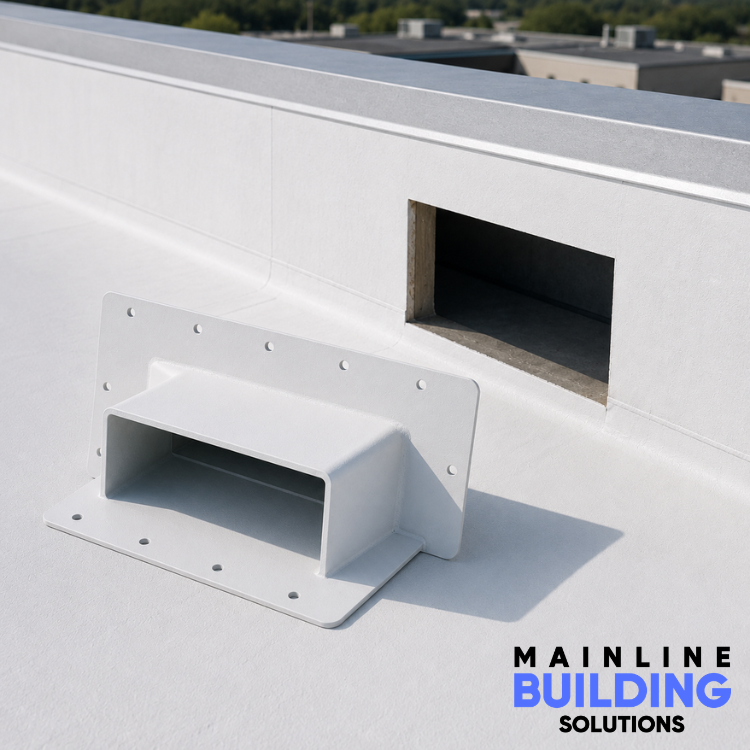
Irregular penetrations are one example. A standard prefabricated component may not be designed to accommodate an unusual shape, structural member, or cluster of penetrations.
Field fabrication may also be useful when:
The flashing dimensions are highly unusual.
The existing roof contains an unexpected condition.
A standard component is unavailable or unsuitable.
Multiple components require a customized detail.
The roof manufacturer requires a specific field-fabricated detail.
The contractor needs to make an adjustment based on actual field conditions.
Field fabrication can provide flexibility that standardized components cannot always provide.
The tradeoff is that the installation crew assumes more responsibility for creating the finished detail. Accurate measurements, proper material preparation, appropriate welding or fastening techniques, and attention to the roofing manufacturer's requirements become particularly important.
When Prefabricated Roof Flashings May Be the Better Choice
For repeatable conditions and standard applications, prefabricated components can offer significant practical advantages.
They can reduce the amount of fabrication required on the roof and give contractors a component that is already configured for its intended application.
This can be especially useful when a project contains a large number of similar penetrations or details. Instead of repeatedly fabricating each one from raw materials, the crew can install prepared components according to the required procedures.
Prefabricated components may also help simplify project planning. Flashings can be identified, ordered, and organized before installation, allowing the contractor to better understand what accessories will be needed before the crew reaches the roof.
For commercial roofing projects, that level of preparation can make a difference in both scheduling and labor management.
FlashCo Prefabricated Flashings for Commercial Roofing Projects
Mainline Building Solutions represents FlashCo as part of its commercial roofing product offerings. FlashCo manufactures prefabricated and premolded roof flashings and accessories for several roofing applications, including TPO and PVC single-ply systems and built-up roofing applications.
FlashCo's product offerings include components such as pipe flashings, split flashings, curbs, drains, scuppers, edge metal, and other accessories. Many products are available in standard, make-to-order, or custom configurations depending on the application.
You can review our current product offerings through our website and access technical information through the company's documents and resources.
For contractors evaluating a commercial roofing project, this type of product support can be useful during the planning stage. Flashing should be considered alongside the membrane, insulation, attachment method, and other roof components rather than selected as an afterthought.
Choosing the Right Flashing Method for the Project
The right flashing method begins with understanding the roof rather than simply choosing the quickest installation option.
Before deciding between prefabricated and field fabrication, contractors should consider the shape and size of the penetration, the roofing membrane, the surrounding materials, the available working space, and the requirements of the roofing system.
It is also important to determine whether the flashing is part of a new roof installation or a repair or replacement project. Existing conditions can introduce variables that are not present in new construction.
For example, an existing commercial roof may have penetrations that were added over time, inconsistent previous repairs, deteriorated substrates, or equipment that limits access around the detail. In those situations, a standard component may not always be the appropriate solution.
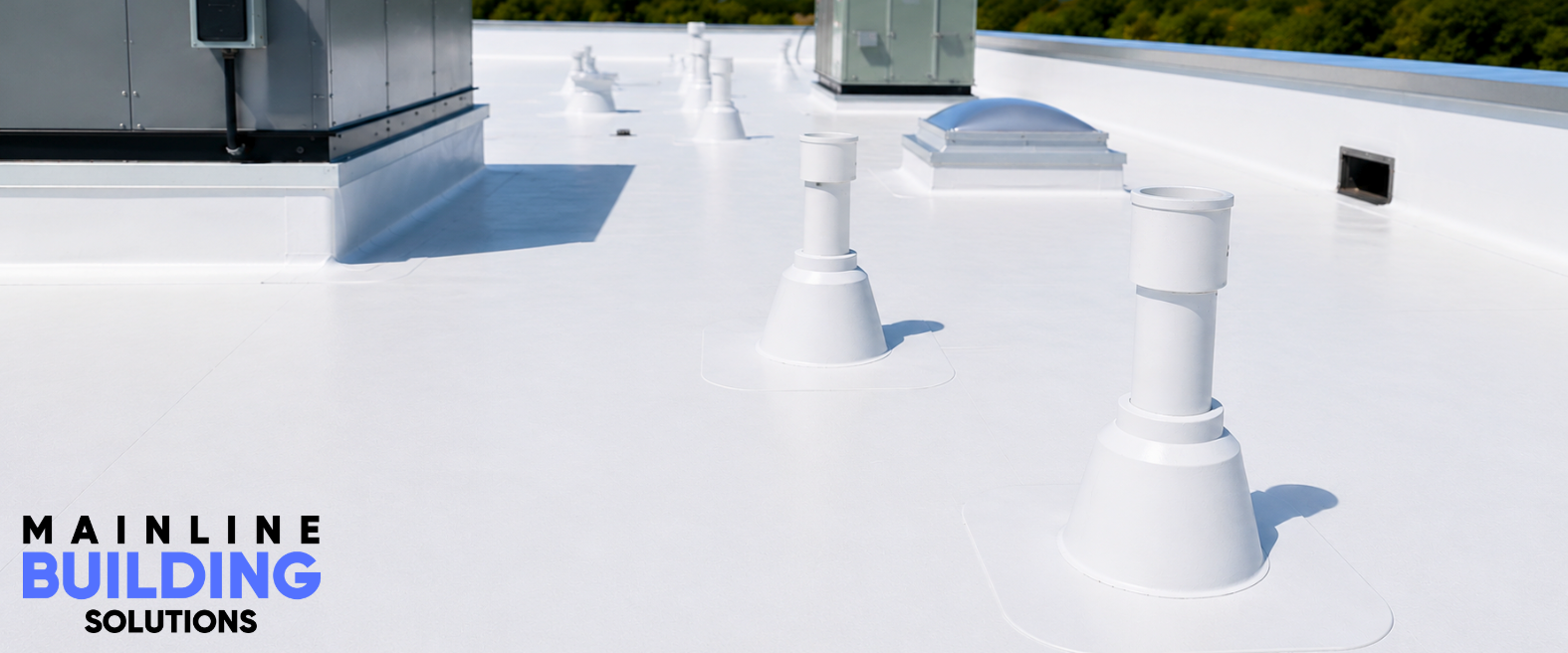
A thorough roof assessment can help identify these conditions before installation begins. Our previous blog on commercial roof assessments discusses the importance of evaluating flashing around HVAC equipment, vents, pipes, skylights, and other vulnerable areas.
The goal is to select the flashing approach that provides the most appropriate combination of fit, installation quality, durability, and compatibility with the complete roofing system.
The Installer Still Matters
Regardless of whether a flashing arrives prefabricated or is fabricated on the roof, installation remains critical.
A prefabricated component can simplify the process, but it still has to be installed correctly. The installer must understand how the component integrates with the roofing membrane and surrounding materials.
Similarly, field fabrication requires the appropriate skill and attention to detail.
IIBEC emphasizes that roofing crews should be familiar with the roofing manufacturer's recommended installation techniques and capable of achieving the details established by the project design team.
This is why product selection and installation should be considered together. A well-designed flashing detail can still fail if it is installed incorrectly, while an experienced contractor can often achieve reliable results with either prefabricated or field-fabricated components when the appropriate method is selected.
Planning Flashing Before Installation
Flashing decisions are best made before the roofing crew is standing on the roof.
During project planning, contractors should identify penetrations, curbs, drains, walls, edges, and other areas requiring specialized detailing. This allows the appropriate materials to be selected and ordered before installation begins.
It also provides an opportunity to review unusual conditions with the roofing system manufacturer, designer, technical representative, or product representative when necessary.
Mainline Building Solutions works with commercial roofing contractors and project teams on product selection, technical considerations, warranty requirements, and other aspects of commercial roofing projects. For projects where flashing requirements are complicated or where multiple product components must work together, early planning can help reduce jobsite surprises.
Have questions about flashing options for your next commercial roofing project? Contact Mainline Building Solutions to discuss your project, product requirements, and available solutions.
Conclusion
The choice between prefabricated and field-fabricated flashing should be based on the specific roof condition rather than the assumption that one method is always better. Field fabrication provides flexibility for unusual or complicated conditions, while prefabricated roof flashings can provide consistency, reduce fabrication work, and simplify installation for many standard and repeatable applications.
The most important consideration is whether the selected flashing method is compatible with the roofing system and can be installed according to the required detail.
When contractors evaluate flashing early in the project, account for actual field conditions, and select components that match the application, they can reduce unnecessary installation challenges and create more reliable roof details.
Flashing may represent a relatively small portion of the overall roofing system, but its role is significant. Properly designed and installed flashing helps protect some of the most vulnerable areas of a commercial roof and contributes to the long-term performance of the entire assembly.
Frequently Asked Questions
Are prefabricated flashings better than field-fabricated flashings?
Not in every situation. Prefabricated components can provide consistency and simplify installation for standard conditions, while field fabrication may be more appropriate for unusual or irregular penetrations. The best option depends on the specific roof detail and manufacturer's requirements.
Can prefabricated flashings be custom made?
Yes. Depending on the manufacturer and product, flashing components may be available in standard, make-to-order, or custom configurations. FlashCo, for example, offers standard, make-to-order, and custom parts for several commercial roofing applications.
When is field-fabricated flashing necessary?
Field fabrication may be appropriate when a penetration or transition has an unusual shape, size, configuration, or other condition that cannot be properly addressed with a standard prefabricated component.
Do prefabricated flashings eliminate installation problems?
No. Prefabricated components can reduce certain fabrication steps, but they still need to be properly selected, positioned, attached, welded, sealed, or otherwise installed according to the roofing system requirements.
Why are roof penetrations such an important flashing detail?
Penetrations interrupt the roof membrane and create transitions between different materials and components. Improperly detailed penetrations can become potential pathways for moisture intrusion, which is why roofing manufacturers and industry professionals place significant emphasis on proper penetration detailing.