

The Hidden Costs of Winter Roof Damage in the Midwest
As the last traces of winter fade across the Midwest, building owners and property managers often feel a sense of relief. Snowstorms, freezing temperatures, and ice accumulation are behind us, but the season leaves behind more than just memories. Commercial roofs that have endured heavy snow loads, ice dams, and repeated freeze-thaw cycles may now harbor damage that can escalate into costly repairs if ignored. Understanding the hidden costs of winter commercial roof damage is critical to protecting your investment and preparing your property for the spring and summer months.
Even when roofs appear intact, the stress of winter can create subtle yet significant issues. Minor cracks in membranes can widen, seams may loosen, and flashing around rooftop equipment may become compromised. These small imperfections often go unnoticed until rain or warmer temperatures reveal leaks, insulation problems, or structural stress. Left unaddressed, minor winter damage can transform into major financial burdens, including expensive emergency repairs, lost revenue due to tenant disruptions, and even a shortened roof lifespan.
Spring presents an ideal opportunity for property managers to address winter roof damage before small issues escalate. A professional roof assessment provides detailed insight into the condition of the roof, including the membrane, flashing, insulation, and drainage systems. With documented findings—measurements, photographs, and prioritized recommendations—building owners can make informed decisions about material selection, preventive maintenance, and repairs. By addressing minor issues now, property managers not only prevent costly surprises later but also optimize long-term durability and energy efficiency.
The Escalating Costs of Winter Damage
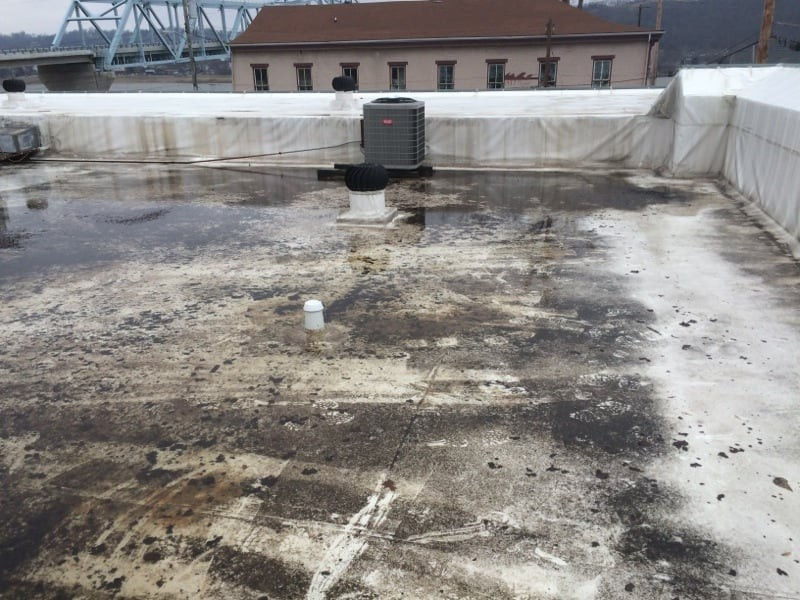
Winter commercial roof damage in the Midwest rarely impacts only the roof membrane. Ice accumulation, ponding water, and freeze-thaw cycles can compromise insulation, rooftop equipment, and structural components. Minor leaks that appear insignificant can lead to water infiltration, mold growth, and weakened structural integrity. If not addressed promptly, these issues can result in emergency repair costs far higher than the expense of early preventive maintenance.
Other hidden costs of winter roof damage include increased energy consumption due to compromised insulation, disruption of tenant operations, and potential liability for unsafe conditions. For example, a small leak near a skylight may seem manageable but could lead to water pooling, ceiling damage, and even interior electrical problems if left untreated. Similarly, minor membrane cracks may expand over time, requiring full section replacements rather than simple patch repairs.
Key risks associated with winter commercial roof damage include:
Escalating repair costs from untreated minor leaks or membrane damage.
Compromised insulation leading to higher heating and energy bills.
Potential operational disruptions for tenants due to water intrusion or unsafe conditions.
Damage to rooftop equipment and structural components from prolonged exposure to ice and moisture.
By identifying and repairing minor damage promptly, building owners can avoid these cascading effects and maintain a safe, comfortable, and efficient facility. Proactive inspections, timely repairs, and the use of high-quality products such as Flex™ roofing membranes, Chem Link® adhesives and sealants, and RoofNado™ restoration solutions help ensure that the roof performs reliably throughout the year.
Identifying Minor Damage Before It Becomes Major
Detecting small problems early is key to preventing expensive winter roof damage. Signs of minor issues include small cracks, blisters, or punctures in the roofing membrane, loose or damaged flashing around HVAC units, vents, or skylights, and evidence of water infiltration such as minor leaks or stains inside the building. Ponding water that persisted after snow and ice melted or insulation or roof deck degradation affecting thermal performance are also warning signs.
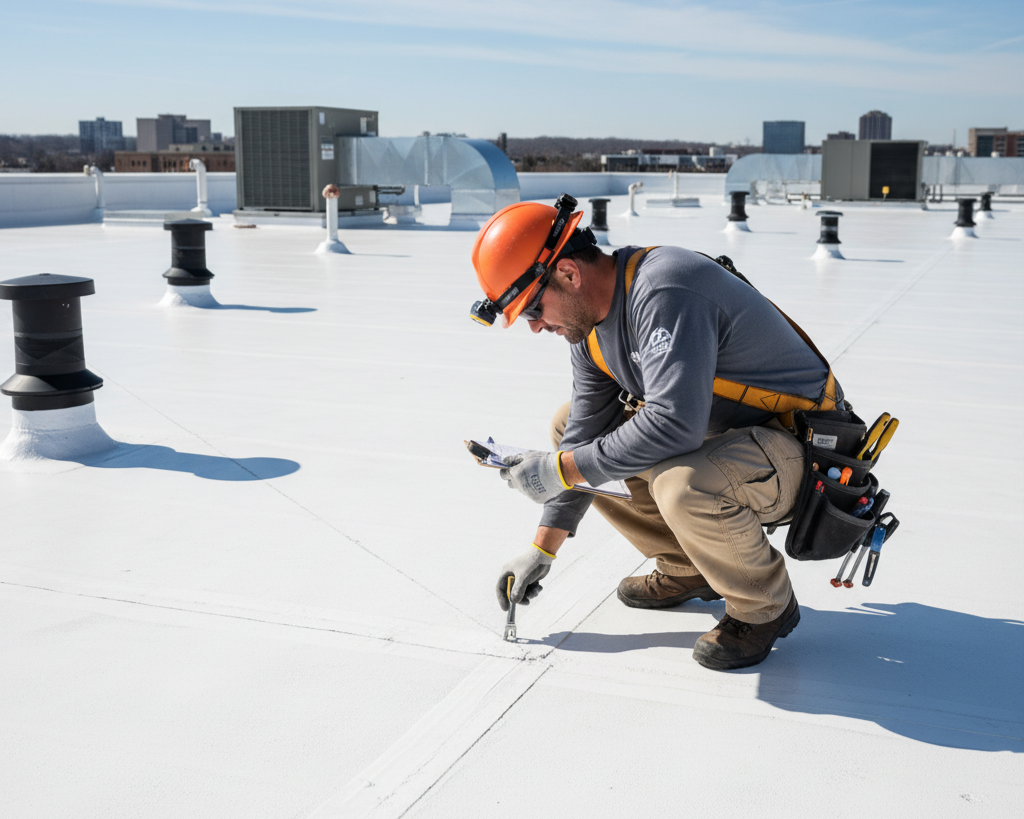
A professional roof assessment is an effective tool for identifying these vulnerabilities. Documented findings allow building managers to plan preventive maintenance, select appropriate materials for repairs, and prioritize issues based on severity and location. Early detection reduces the likelihood of emergency repairs and ensures roofs remain safe, functional, and energy-efficient. By understanding exactly where vulnerabilities exist, property managers can plan for spring improvements strategically rather than reactively.
Essential Spring Roof Prep
Spring is the ideal time to repair winter damage and prepare for future seasonal challenges. Property managers can reduce long-term costs by addressing vulnerabilities now. Key steps include:
Cleaning drains, scuppers, and gutters of debris to ensure proper water flow and prevent ponding.
Inspecting membranes for cracks, blisters, punctures, or other signs of winter wear.
Evaluating flashing and seals around rooftop equipment, vents, and skylights.
Checking insulation and structural components for stress caused by snow, ice, and freeze-thaw cycles.
Performing minor repairs or applying adhesives and sealants to vulnerable areas to prevent further deterioration.
Using high-quality products such as Flex roofing membranes, Chem Link adhesives and sealants, and RoofNado restoration solutions during spring maintenance ensures long-lasting durability, energy efficiency, and resistance to future seasonal damage. Selecting the right materials is critical; flexible, resilient membranes and durable adhesives protect against freeze-thaw cycles, ice dams, snow loads, and other stresses that can compromise roof performance and increase repair costs over time.
Flex Roofing Membranes: Resilient Winter Protection
Flex roofing membranes are engineered to withstand extreme temperature fluctuations, heavy snow loads, and repeated freeze-thaw cycles. Their elasticity allows the roof to expand and contract without cracking, maintaining a watertight barrier. Incorporating Flex membranes during spring maintenance helps repair minor damage from winter and reinforces vulnerable areas, extending the overall lifespan of the roof. Flex membranes are also energy-efficient, helping reduce heating and cooling costs, which can increase after winter if insulation or membranes are compromised.
Chem Link Adhesives and Sealants: Sealing Minor Vulnerabilities
Chem Link adhesives and sealants are ideal for addressing minor winter damage such as loose seams or compromised flashing. These products provide strong, long-lasting bonds that resist moisture infiltration and temperature stress. Applied during preventive maintenance, Chem Link solutions reduce the risk of leaks, prevent small issues from escalating, and help protect insulation and structural components. Facility managers can use these materials to reinforce weak areas identified during professional assessments, ensuring the roof is prepared for the next winter season.
RoofNado Restoration Solutions: Reinforcing Stressed Areas

RoofNado products are designed to restore roofing membranes affected by minor cracks, weak seams, or other winter wear. By reinforcing these stressed areas, RoofNado solutions prevent small issues from escalating into major repairs, keeping roofs safe, functional, and energy-efficient. Applying RoofNado products in spring ensures the roof is prepared for future seasonal challenges and extends its usable life. Restoration strategies like this are a cost-effective way to address hidden winter damage without committing to a full roof replacement.
Preventive Maintenance Strategies
Regular inspections and maintenance are essential to minimizing winter commercial roof damage. Preventive strategies include conducting seasonal roof assessments with professional documentation, prioritizing repairs based on severity and location of damage, selecting high-performance membranes, adhesives, and restoration solutions, scheduling regular cleanings to prevent water accumulation and debris buildup, and maintaining accurate records for budgeting, compliance, and long-term planning.
Property managers who embrace preventive maintenance strategies are better positioned to avoid costly emergency repairs, maintain building energy efficiency, and extend the overall life of their roofs. For example, early detection and sealing of minor cracks can prevent interior water damage and ceiling collapse during the next heavy snowstorm. Similarly, cleaning drains and scuppers reduces ponding water, which is a common contributor to winter roof failure.
Protect Your Roof, Protect Your Investment
Winter commercial roof damage in the Midwest can be subtle yet costly if left unaddressed. Minor membrane cracks, weak seams, or compromised insulation can quickly escalate into expensive repairs or replacements. Proactive inspections, material selection, and preventive maintenance strategies are essential for protecting commercial roofs and extending their lifespan.
Mainline Building Solutions provides expert roof assessments and guidance for Midwest property owners and managers. Our team helps identify minor damage, prioritize repairs, and select the right products for long-term performance. By using trusted solutions such as Flex roofing membranes, Chem Link adhesives and sealants, and RoofNado restoration products, building owners can ensure their roofs remain durable, energy-efficient, and resilient against future seasonal challenges.
Take action this spring to protect your investment. Schedule a professional roof assessment with Mainline Building Solutions today to receive actionable recommendations for your property. Our experienced team will work closely with you to create a customized maintenance plan that addresses your building’s unique needs. By investing in preventative care and high-quality materials, you can safeguard your commercial roof, reduce unexpected costs, extend the life of your assets, and provide a safe, comfortable environment for tenants for many years to come.